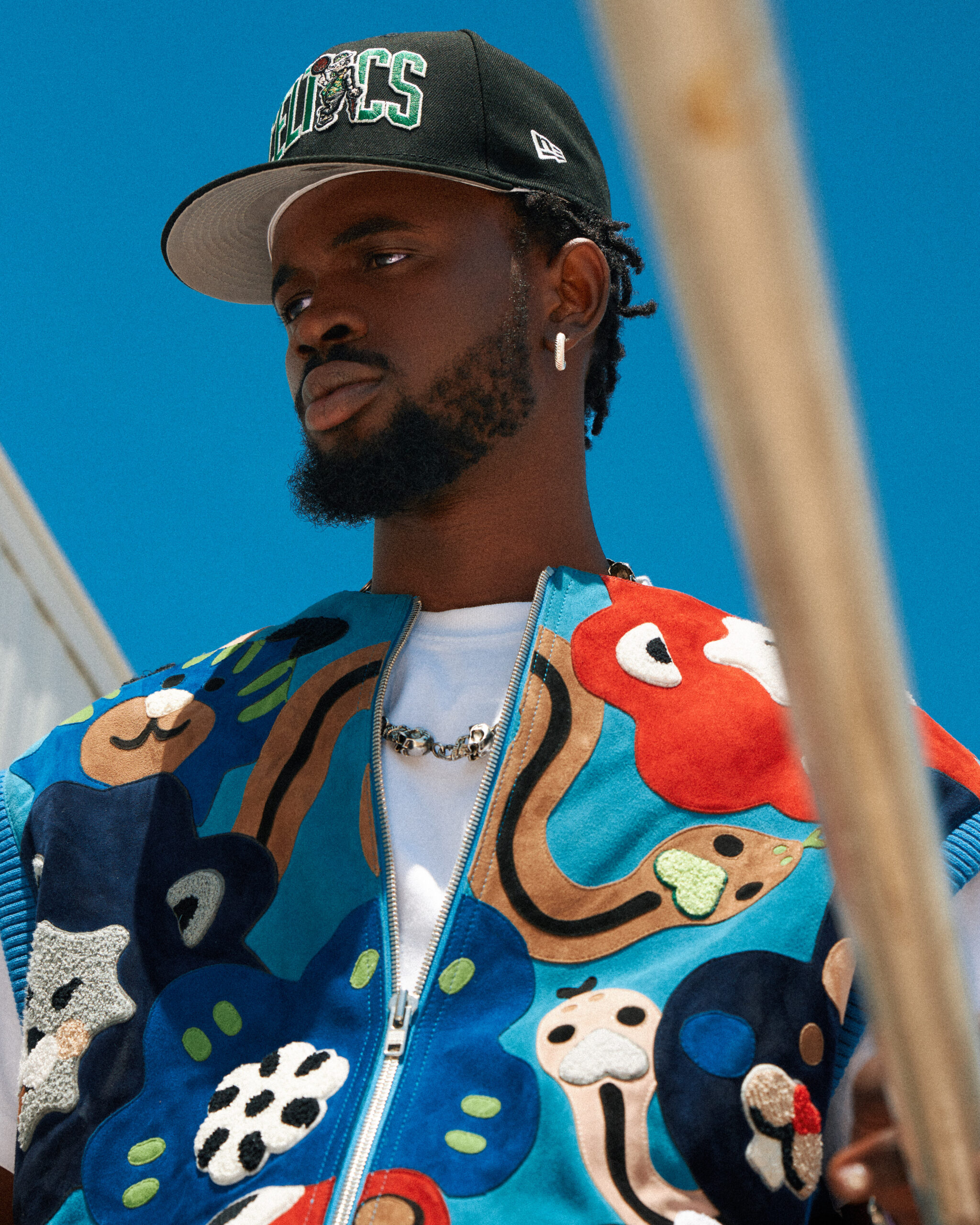
Black Sherif released "Second Sermon" in 2021 and became famous faster than almost any Ghanaian artist before him. He was nineteen years old. The song traveled through WhatsApp groups, Instagram pages and TikTok feeds across West Africa and the diaspora before most industry people in Accra had processed what had happened. By the time they did, Burna Boy had requested a remix and the conversation had moved to what the second album would sound like.
From Konongo
He was born Mohammed Ismail Sherif on 9 January 2002 in Konongo, a town in the Ashanti Region known for artisanal gold mining and small-scale industry. It is not a place that appears regularly in the story of Ghanaian pop music, which made his emergence all the more striking. He moved to Accra to study at the University of Professional Studies, and it was in that period that he began building an audience through street performances and social media posts.
"First Sermon" came before "Second Sermon" and found a smaller audience. But it established the template: a confessional delivery that blended Twi, English and fragments of Hausa, sitting over production that referenced trap, drill and West African rhythms without being any of them completely. It sounded like something new, which is the hardest thing to achieve.
The Burna Boy remix and what followed
When Burna Boy asked to be on the "Second Sermon" remix, it signalled to the global music industry that Black Sherif was worth paying attention to. The remix reached audiences that the original had not. He was signed to Empire Distribution. His debut album "The Villain I Never Was" arrived in 2022, with a feature from Alicia Keys on the lead single "Oh Livin It".
He won Best New Artist at the 3 Music Awards in 2022. He performed at major festivals. He became, at twenty-two, one of the most discussed young artists in African music. His estimated net worth is $1.5 million, a figure that will look conservative in five years if the trajectory holds.