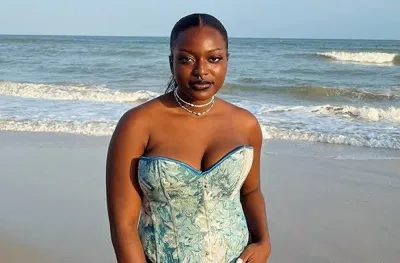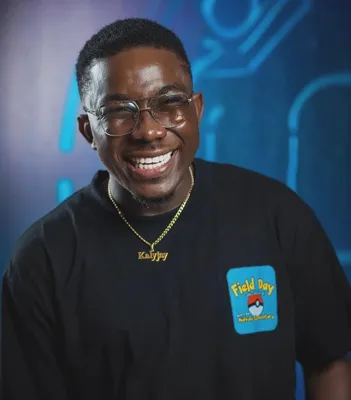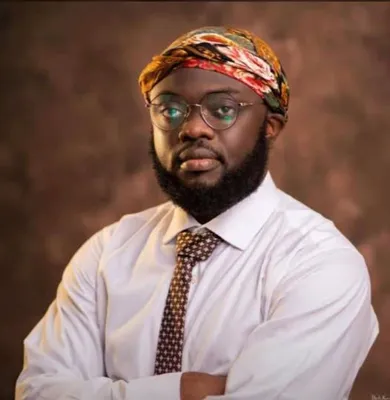
Ghana's political and social conversation has a new stage, and it is not a radio studio or a television panel. It is a smartphone screen. Over the past five years, a generation of young Ghanaians has built substantial followings on YouTube, X, Instagram, and TikTok, using those platforms not just for entertainment but to interrogate governance, champion social causes, and make information more accessible to ordinary Ghanaians. Five names stand out as genuine forces shaping national discourse in 2025.
1. KalyJay
If there is one name synonymous with Ghana's digital activism movement, it is KalyJay. Operating primarily on X (formerly Twitter) under the handle @KalyJay1, he was one of the most prominent voices amplifying the #FixTheCountry campaign, a grassroots movement that erupted in 2021 demanding accountability on economic hardship, corruption, and failing infrastructure.
What makes KalyJay effective is consistency. He does not surface only during major news cycles; he is present daily, commenting on government decisions, calling out official statements that contradict known facts, and framing political issues in language that ordinary Ghanaians find relatable. His posts routinely cross over from X into radio and TV discussions, demonstrating the reach of a well-timed tweet in Ghana's media ecosystem.
KalyJay represents a new category of Ghanaian public figure: someone with no official title who nonetheless commands the attention of politicians, journalists, and citizens alike.
2. SneakerNyame
SneakerNyame, born Yaw Boadu-Ayeboafoh, has built a brand that refuses to stay in one lane. His name blends sneaker culture with the Akan word for God, and that combination says something about his content philosophy: take something people already love and give it meaning.
His platform covers fashion, lifestyle, and personal development, but SneakerNyame regularly pushes into territory most Ghanaian male influencers avoid. He speaks openly about mental health, discussing anxiety, self-doubt, and the pressure young Ghanaian men face to project success regardless of their actual circumstances. At a time when mental health awareness in Ghana is growing but still carries stigma, his willingness to be candid has earned him a trust that goes beyond his content's entertainment value.
He is also a vocal advocate for youth entrepreneurship and digital branding, making him a reference point for young Ghanaians looking to build something of their own in the creator economy.
3. Ama Governor
Ama Governor occupies a unique and often uncomfortable space in Ghanaian public discourse. A trained legal professional who was denied call to the Bar by the General Legal Council, she turned her personal experience of institutional discrimination into a platform for broader advocacy on gender, sexuality, and legal reform.
Through vlogs and commentary, she addresses issues that rarely get serious treatment in mainstream Ghanaian media: the treatment of marginalized communities, the gap between Ghana's constitutional protections and lived reality, and the role of institutions in perpetuating exclusion. Her audience is smaller than some names on this list, but it is deeply engaged, drawn to her analytical approach and her refusal to soften difficult arguments for palatability.
Ama Governor is proof that meaningful digital influence does not require viral moments. It can be built steadily, through substance and the courage to say things that others in a room would leave unsaid.
4. Tech in Twi
Kwabena Boateng started Tech in Twi with a simple observation: most technology education in Ghana is delivered in English, which excludes millions of Ghanaians who are more comfortable learning in Twi or other local languages. His response was to build a YouTube channel that teaches digital skills in Akan, covering everything from smartphone basics and internet safety to coding fundamentals and social media for business.
The cultural dimension of this work is as significant as the educational one. By using Twi as the medium for technical instruction, Tech in Twi challenges the assumption that modernity requires abandoning local languages. It demonstrates that Twi is a language capable of carrying complex, contemporary ideas, which has resonated with audiences who have often been implicitly told otherwise.
For Ghanaians outside major cities, or those who received less formal education in English, Tech in Twi is often the most accessible pathway into the digital literacy conversations shaping the country's economic future.
5. Kwadwo Sheldon
Kwadwo Sheldon has become one of the most recognized names in Ghanaian digital entertainment, built on a reputation for comedy that bites. His YouTube channel built an audience through viral commentary on Ghanaian celebrity culture, but his most enduring content addresses governance and public accountability with a directness that most established media personalities cannot match.
His rants on corruption, poor public services, and political hypocrisy have become a genre of their own in Ghana's online space. He makes people laugh while making a serious point, which is a difficult combination to sustain. The result is a channel that functions simultaneously as entertainment and political commentary, reaching audiences who might not engage with either in isolation.
Kwadwo Sheldon's influence is visible in the way politicians and public figures have begun to acknowledge, and occasionally respond to, content from his channel. When a YouTuber's video prompts an official response, it is a measure of how thoroughly the boundaries between social media and public discourse have dissolved in Ghana.
What These Five Have in Common
None of these five influencers works in a traditional media institution. None has the backing of a major broadcaster or publication. What they share is an understanding of how to build trust with a specific audience, and the discipline to show up consistently for that audience over time. In doing so, they have demonstrated that Ghana's information landscape is no longer controlled from a handful of studios and editorial offices. It is being shaped from laptops and smartphones, by people who identified a gap and decided to fill it themselves.