
Ghana has produced footballers who did not just play in Europe. They defined eras, won titles that had never been won before, and created moments that football fans still talk about decades later. The thread running from Abedi Pele’s Marseille to Mohammed Kudus at Tottenham is one of the most remarkable stories in African football history.
Abedi Pele: The Champion of Marseille
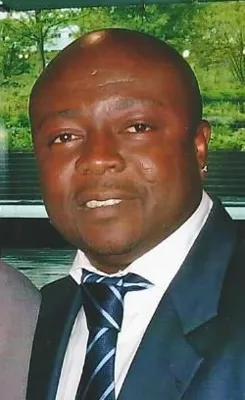
In May 1993, Abedi Ayew became the first African footballer to win the UEFA Champions League. Playing for Olympique de Marseille against AC Milan in Munich, he was central to the campaign that brought France its only European Cup. Abedi was not a fringe player filling a squad role. He was one of Marseille’s best players, a technically gifted attacking midfielder who could change a game with a single moment of vision. His three Ballon d’Or awards between 1991 and 1993 confirmed what European observers already knew: he was among the best players in the world, not just the best in Africa.
Abedi’s success at Marseille opened a door that Ghanaian footballers have been walking through ever since. He showed that a player from Accra could compete with and beat the best teams in Europe, and he did it before African football had the infrastructure, the academies, or the global scouting networks that make talent discovery easier today.
Tony Yeboah: The Volleys That Stopped Time
Ask any Leeds United fan of a certain age about Tony Yeboah and they will describe two goals. The first came against Wimbledon in August 1995: a bouncing ball outside the penalty area, and a right-foot volley that flew into the top corner so hard and fast that the goalkeeper did not move. The second, against Liverpool at Elland Road a few weeks later, was somehow even better: a half-volley from outside the box that dipped, swerved, and crashed into the net. Both were voted BBC Goal of the Month. The Wimbledon goal was later named Goal of the Decade.
Yeboah had already established himself at Eintracht Frankfurt before moving to Leeds, but it was those two autumn months in 1995 that made him unforgettable. He scored 24 goals in 47 appearances for Leeds and remains one of the most celebrated foreign players in the club’s history.
Michael Essien: The Bison of Chelsea
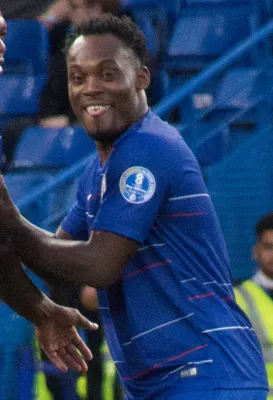
Michael Essien arrived at Chelsea in 2005 for a then-record fee for an African player: around 24.4 million pounds. He repaid every penny. Playing under Jose Mourinho and later other managers, Essien became the engine of a Chelsea side that dominated English football in the mid-2000s. His physicality was obvious, but it was his technical quality that separated him from simple holding midfielders. He could carry the ball, play it forward under pressure, and score goals that midfielders are not supposed to score.
His goal against Arsenal in the League Cup in 2007, a bicycle kick from outside the box, is still shown on highlight reels. He won two Premier League titles, an FA Cup, and eventually the Champions League with Chelsea in 2012, though injury limited his role in that campaign. Across nine years at the club, he appeared 256 times. Few foreign players have been as consistently important to Chelsea as Essien was during that era.
Asamoah Gyan: The World Cup Man
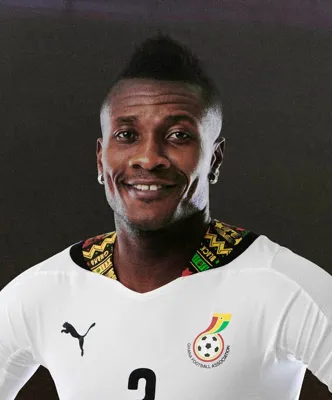
No African player has scored more World Cup goals than Asamoah Gyan. His eight goals across three tournaments, in 2006, 2010, and 2014, set a record that still stands. The 2010 World Cup in South Africa defined his career in two ways. He scored the goal that beat the United States in extra time in the round of 16, becoming only the second Ghanaian to score in a World Cup knockout game. Then, in the quarter-final against Uruguay, came the moment that still haunts Ghanaian football: Luis Suarez’s handball on the goal line in the final seconds, and Gyan’s penalty that hit the crossbar.
Ghana went out on penalties. Gyan carries the weight of that miss in a way that is unfair to his broader legacy, but that is what World Cup moments do. His career at club level, particularly at Sunderland where he scored 11 Premier League goals in a single season, showed a striker who could perform consistently at the top level of European football.
Sulley Muntari and the Midfield Engine Room
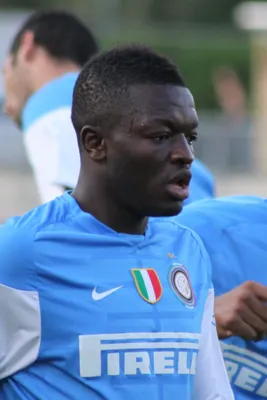
Sulley Muntari’s career arc took him from Udinese to Portsmouth, where he won the FA Cup in 2008, and then to Inter Milan, where he won the Serie A title and the Champions League in 2010 as part of Jose Mourinho’s treble-winning side. He was the kind of player who made teams better without always getting the individual credit. At Inter, his box-to-box energy complemented the more creative players around him. His goal for Ghana against England at the 2010 World Cup, a long-range strike that briefly made it seem like Ghana could reach the semi-finals, remains one of the tournament’s standout moments.
Andre Ayew: Abedi’s Son, His Own Man
Growing up as Abedi Pele’s son carries expectations that would crush most players. Andre Ayew has handled them with composure. He spent six seasons at Marseille, the club his father made famous, winning the Ligue 1 title in 2010. He moved to Swansea City in 2015 on a free transfer and immediately became one of the best players in the Premier League that season, scoring seven goals in his first seven matches. His career across France, England, Turkey, and Qatar has been that of a professional who competes seriously at every level he plays, and his record as Ghana’s joint all-time leading goal scorer alongside Asamoah Gyan gives him a place in the country’s football history that stands entirely on its own.
Mohammed Kudus: The Present and the Future
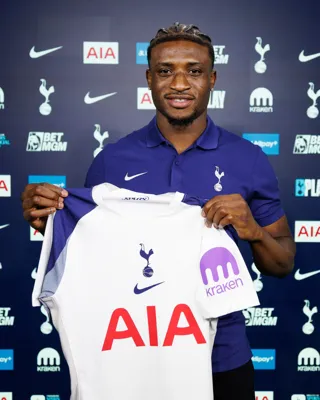
When Mohammed Kudus arrived at West Ham United from Ajax in 2023, he cost around 38 million pounds. Within months, he was one of the most exciting attacking players in the Premier League. His combination of dribbling, pace, and finishing, along with a willingness to play anywhere across the front line, made him exactly the kind of player modern football rewards. His move to Tottenham Hotspur in 2025 confirmed his status as one of the most sought-after players in European football.
Kudus is only in his mid-twenties. The story of Ghanaian footballers in Europe is not a history lesson. It is still being written.