

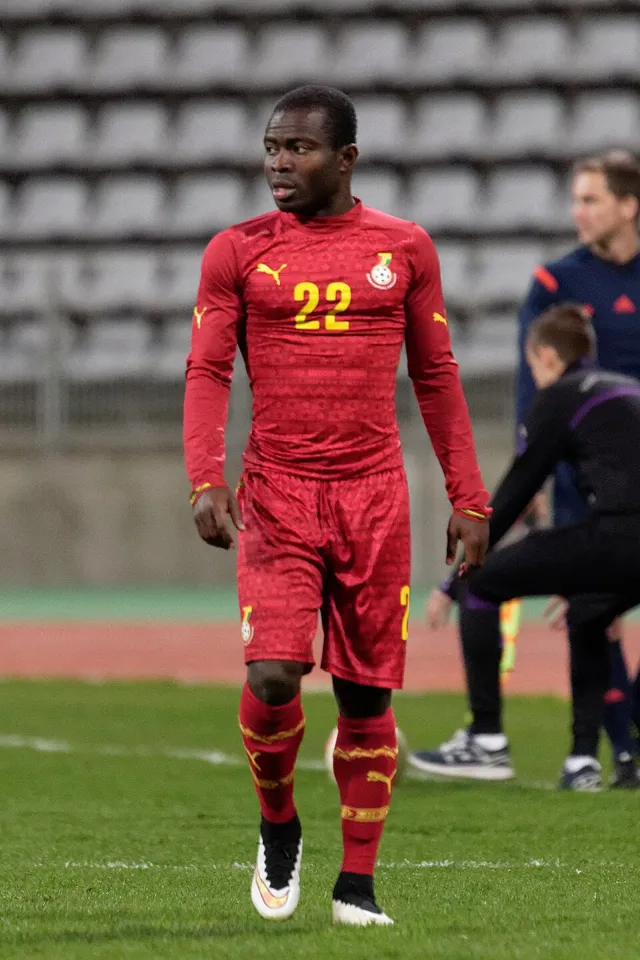
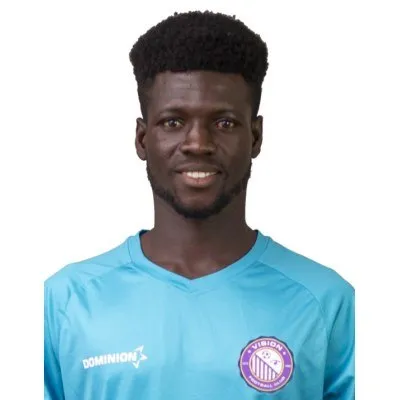
 Photo: Pierre-Yves Beaudouin / CC BY-SA 4.0
- Identity confirmed
- Date of birth checked
- Career history reviewed
- Awards & achievements audited
Frank Acheampong
Footballer (Winger)
About Frank Acheampong
Frank Acheampong has spent most of the last decade in Chinese football, and in February 2026 he joined his fourth Super League club, Dalian Yingbo.
Thailand and Belgium
Frank Opoku Acheampong was born on 16 October 1993 in Asante Mampong and started at King Faisal Babes. He had trials in Abu Dhabi and with NK Osijek in Croatia, where a work permit was refused. In February 2011 he signed for Buriram United in Thailand, and after a trial at Celtic he went on loan to Anderlecht in January 2013. Anderlecht bought him for €1 million that April. He scored his first Belgian goal in a 4-1 win over Gent and made his Champions League debut against Benfica in September 2013.
China
Tianjin TEDA took him on loan in July 2017, and his four goals in 12 games helped keep them up, so they signed him permanently that November. He joined Shenzhen FC on a free in April 2021 until the club folded in January 2024, then moved to Henan FC. Henan announced his exit after the 2025 season, and Dalian Yingbo signed him on 24 February 2026.
Ghana
He made his Black Stars debut as a starter in a 1-1 friendly draw with China in Xi'an on 15 August 2012.
Frequently asked questions about Frank Opoku Acheampong
What is Frank Acheampong's net worth?
Frank Acheampong has an estimated net worth of $3 million (estimated).
How old is Frank Acheampong?
Frank Acheampong is 33 years old, born October 16, 1993.
What is Frank Acheampong known for?
Frank Acheampong is a Footballer (Winger).
What is Frank Acheampong's nationality?
Frank Acheampong is Ghanaian.
Personal Information
- Full Name
- Frank Opoku Acheampong
- Date of Birth
- 16 October 1993
- Nationality
- Ghanaian
- Region
- Ashanti
Related Personalities
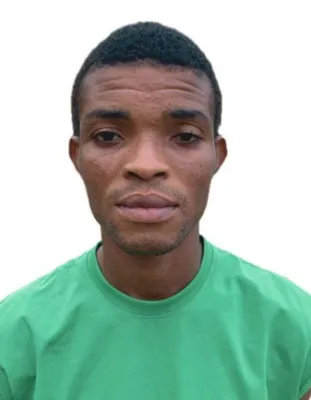 Frank Ackom
Footballer (Defender)
 Frank Amankwah
Footballer (Midfielder)
 Frank Awere
Footballer (Midfielder)
 Frank Boateng
Footballer (Goalkeeper)
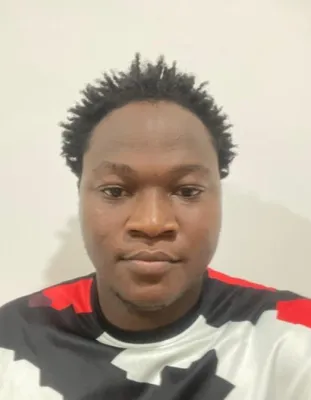 Frank Dongballe
Footballer (Defender)
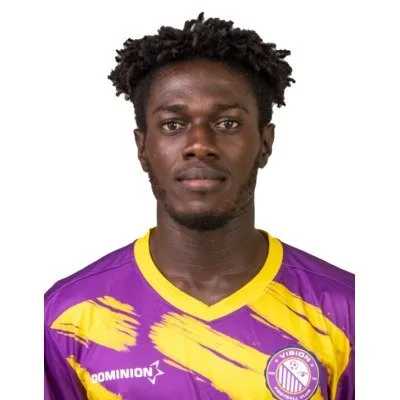 Frank Duku
Footballer (Forward)
 Franklin Yamoah
Footballer (Goalkeeper)
Compare Frank Acheampong
Sources & References
- "Frank Acheampong". Wikipedia.
Profile compiled from publicly available records. See our full source methodology →