

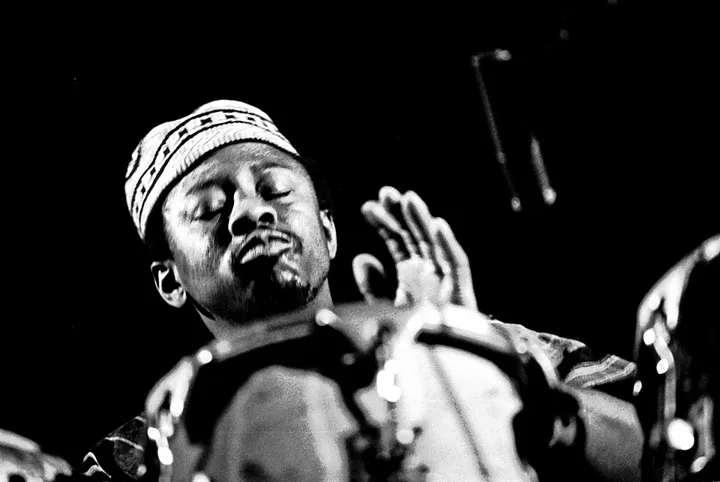
- Identity confirmed
- Date of birth checked
- Career history reviewed
- Awards & achievements audited
Rebop Kwaku Baah
Percussionist
About Rebop Kwaku Baah
Anthony "Rebop" Kwaku Baah was a Ghanaian percussionist who worked with the 1970s rock bands Traffic and Can and recorded with many leading musicians of the era.
Early life
He was born on 13 February 1944 in Konongo, in the Ashanti Region.
Traffic
In 1969 he played on the jazz pianist Randy Weston's album African Cookbook and worked with Nick Drake on "Three Hours". He met the English band Traffic on tour in Sweden and joined them in 1971, playing on Welcome to the Canteen, The Low Spark of High Heeled Boys, Shoot Out at the Fantasy Factory, On the Road and When the Eagle Flies. In 1973 he appeared in Eric Clapton's Rainbow Concert and played on the Rolling Stones' Goats Head Soup and Free's "Wishing Well".
Can and later work
After Traffic split in 1974 he played on Steve Winwood's first solo album (1977). That year he and the former Traffic bassist Rosko Gee joined the German band Can, recording Saw Delight, Out of Reach and Can before the group broke up in 1979. His solo albums include Reebop (1972) and Trance (1977).
Death
He died of a brain haemorrhage during a performance in Stockholm on 12 January 1983, while on tour with Jimmy Cliff. His last album, Melodies in a Jungle Man's Head, was released unfinished.
Frequently asked questions about Anthony Kwaku Baah
How old was Rebop Kwaku Baah at death?
Rebop Kwaku Baah died on January 12, 1983, aged 38. Rebop Kwaku Baah was born on February 13, 1944.
What was Rebop Kwaku Baah known for?
Rebop Kwaku Baah was a Percussionist.
What was Rebop Kwaku Baah's nationality?
Rebop Kwaku Baah was Ghanaian.
Personal Information
- Full Name
- Anthony Kwaku Baah
- Date of Birth
- 13 February 1944
- Date of Death
- 12 January 1983
- Nationality
- Ghanaian
- Region
- Ashanti
Related Personalities





Compare Rebop Kwaku Baah
Sources & References
- "Rebop Kwaku Baah". Wikipedia.
- "Wikidata entry Q961172". Wikidata.
Profile compiled from publicly available records. See our full source methodology →