

- Identity confirmed
- Date of birth checked
- Career history reviewed
- Awards & achievements audited
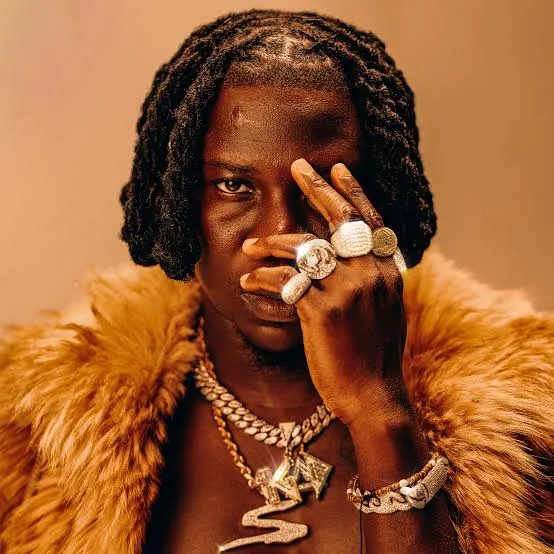
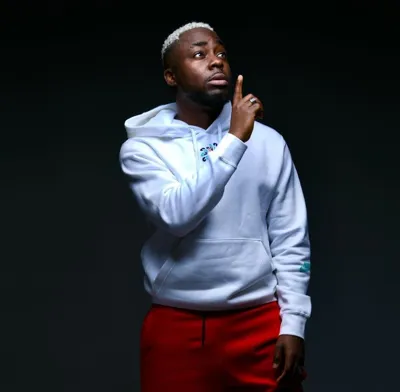
Stonebwoy
Dancehall Artiste, Singer, Songwriter
About Stonebwoy
Stonebwoy is the artist who gave Ghanaian dancehall a passport. Blending Afropop, dancehall and reggae across more than a decade of recordings, he has carried Ghana's sound further onto the international reggae circuit than almost any Ghanaian before him, and he has done it while remaining rooted in the Ashaiman neighbourhood where he grew up. His career is a study in what Ghanaian music looks like when it refuses to choose between local authenticity and global ambition.
Early life and education
He was born Livingstone Etse Satekla on 5 March 1988 in Ashaiman, the densely populated urban district just east of Accra on the Tema motorway. His family has roots in the Volta Region, and the Ewe cultural tradition runs through his music in ways that are not always immediately obvious but that give it a texture distinct from the Akan-dominant mainstream of Ghanaian popular music.
He attended Ashaiman M/A Primary School and then went on to complete secondary school, where he found himself in the same class as a classmate who would go on to become Sarkodie. The coincidence of two of Ghana's most consequential musical careers sharing a secondary school classroom has been noted often, and it is a reminder of how tightly the world of Ghanaian music is connected at its roots.
He did not stop at secondary school. He enrolled at the University of Professional Studies in Accra, where he earned a bachelor's degree in marketing in 2013, graduating while already well into his professional music career. The degree was not a backup plan. It was an education he valued alongside the one happening in studios and on stages.
Early career and radio breakthrough
His earliest public recognition came through Kasahare Level, the rap competition broadcast on Adom FM that served as a talent showcase for young Ghanaian rappers in the late 2000s. He dominated the competition over a sustained run, building an underground following among listeners who were tracking the show and collecting a reputation as one of the most gifted young performers in Accra's hip-hop circuit.
From that base he began recording seriously, developing the dancehall and reggae sound that would define his career. He adopted the name Stonebwoy as his performance identity and the BHIM acronym, standing for Born Hustler Inspired by Music, as the shorthand for his movement. The foundation was laid quietly and carefully, which is why the debut album, when it came, felt less like an announcement and more like a confirmation of something that had been building for years.
Discography and musical growth
His debut album Grade 1 arrived in 2012 and introduced him to the wider Ghanaian public as a fully formed artist. It was followed by Necessary Evil in 2014, which expanded his sound and his audience and confirmed that he was not a one-album story. Epistles of Mama in 2017 is considered his finest work, a cohesive and emotionally honest record built around his relationship with his mother and the Ashaiman world that shaped him. It moved him from prominent act to headline artist.
Anloga Junction came in 2020, recorded partly during the global pandemic lockdowns and released to a world that was consuming music differently. The album demonstrated a willingness to incorporate electronic textures and production approaches associated with global afropop while keeping the reggae and dancehall foundations intact. His most recent major releases have continued that evolution, showing an artist who is still developing rather than repeating himself.
His singles have been as important as his albums to his career. Baafira, Nominate, Sobolo, Everlasting, Epistles of Mama and Bawasaba are among the records that have defined his reputation. He is one of the few Ghanaian artists who is equally known for album-length statements and for standalone singles, a versatility that has extended his appeal across different kinds of music listeners.
International reach
His international profile rests substantially on his standing in the reggae and dancehall world beyond Africa. He has performed at Reggae Sumfest in Jamaica, the most prestigious reggae festival on the planet, and at major festivals across Europe, the United States and the Caribbean. These are not the typical touring circuits for West African artists, and his presence on them reflects the degree to which his music has been received as legitimate within global reggae culture rather than simply as an African novelty.
He has collaborated with major names in Caribbean dancehall and reggae, and his features on tracks by artists outside Ghana have introduced his voice and his sound to audiences who had no prior route to Ghanaian music. Each collaboration has widened the net without forcing him to dilute the sound.
Awards
His award record is among the most significant in Ghanaian music. He took the BET Award for Best International Act: Africa in 2015, becoming only the second Ghanaian artist to win the category. He has won the Ghana Music Awards Artiste of the Year title, including in 2015 and 2024, a gap of nearly a decade between wins that speaks to a sustained rather than momentary relevance at the top of the industry. He has also won the Ghana Music Awards Reggae/Dancehall Artiste of the Year prize in almost every year he has competed for it, a record of consistency in his chosen genre that has no close equivalent in Ghanaian music.
Burniton Music Group and business
He runs his own record label, Burniton Music Group, through which he releases his own work and develops artists he believes in. The label has signed acts from Ghana and across West Africa, and it operates as both a creative platform and a statement of independence. Owning his masters and controlling his releases puts him in a position that most Ghanaian artists of his generation do not occupy.
He has also built a business profile outside music, with endorsements, investments and public engagements that reflect a deliberate approach to building financial security alongside creative success. He has spoken publicly about the importance of planning beyond the lifespan of a music career.
BHIM Nation
The fanbase he calls BHIM Nation is one of the most organised and committed fan communities in Ghanaian entertainment. Like the Shatta Movement that his rival leads, BHIM Nation is an active community rather than a passive audience, and its members identify with a set of values, a visual identity and a collective loyalty that extends well beyond any individual song or album. Managing that community is itself a significant part of Stonebwoy's public role.
Personal life
He is married to Dr Louisa Ansong Satekla, a dentist, and the couple have two children. Their relationship has been public in the sense that both partners maintain active social media presences, but private in the sense that they have kept the details of their life together out of the tabloid entertainment coverage that follows both of them. Dr Louisa has developed her own public profile, and she is frequently cited as evidence that Stonebwoy's life beyond the stage reflects the values he raps about.
The Shatta Wale rivalry
His long-running rivalry with Shatta Wale has been one of the defining sub-plots of Ghanaian music for a decade. The two have traded verbal attacks across songs, interviews and social media posts, and their respective fanbases have often matched or exceeded their artists in intensity. The rivalry reached its most dramatic public moment at the 2019 Ghana Music Awards, where an altercation between the two camps led to both being banned from the event, a decision that was eventually reversed. The feud has been commercially useful for both artists, generating attention that money cannot buy, but it has also at times consumed energy that might have been better directed elsewhere.
Musical Legacy
Stonebwoy's place in Ghanaian music history is not in doubt. He took a genre, Jamaican-derived dancehall, and made it clearly Ghanaian without stripping it of the qualities that gave it global appeal. He earned recognition on the international reggae circuit on its own terms, not as a curiosity from Africa but as a voice capable of holding his own on any stage the genre uses. And he has done it twice over, winning the industry's biggest awards nearly a decade apart, which is the kind of career arc that very few artists anywhere manage.
Frequently asked questions about Livingstone Etse Satekla
What is Stonebwoy's net worth?
Stonebwoy has an estimated net worth of $6 million (estimated).
How old is Stonebwoy?
Stonebwoy is 38 years old, born March 5, 1988.
What is Stonebwoy known for?
Stonebwoy is a Dancehall Artiste, Singer, Songwriter.
Who is Stonebwoy married to?
Stonebwoy is married to Dr. Louisa Ansong Satekla (m. 2017).
Does Stonebwoy have children?
Stonebwoy's children: Catherine Jidula Satekla, L Janam Joachim Satekla.
What is Stonebwoy's nationality?
Stonebwoy is Ghanaian.
Where did Stonebwoy study?
Stonebwoy studied at Tema Methodist Day Senior High School Bachelor’s Degree in Public Administration: (GIMPA) (2024) Master’s Programme in International Public Relations and Diplomacy: GIMPA University of Professional Studies Accra (UPSA).
Personal Information
- Full Name
- Livingstone Etse Satekla
- Nickname
- Stonebwoy
- Date of Birth
- 5 March 1988
- Nationality
- Ghanaian
- Region
- Greater Accra
- Spouse
- Dr. Louisa Ansong Satekla (m. 2017)
- Children
- Catherine Jidula Satekla, L Janam Joachim Satekla
- Religion
- Christian
Education
Awards & Achievements
Connections
How Stonebwoy is linked to other figures on Agyedin.

Related Personalities


Compare Stonebwoy
Schools
Sources & References
- "Stonebwoy". Wikipedia.
Profile compiled from publicly available records. See our full source methodology →