

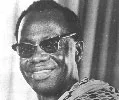
- Identity confirmed
- Date of birth checked
- Career history reviewed
- Awards & achievements audited
Kofi Abrefa Busia
Politician, University Teacher, Head of Government
About Kofi Abrefa Busia
Kofi Abrefa Busia was a Ghanaian scholar and politician who was Prime Minister of Ghana from 1969 to 1972. A leading opponent of Kwame Nkrumah, he led the Progress Party to victory in 1969 and helped restore civilian rule after the first military government, but was overthrown in a coup in January 1972.
Early life and education
He was born on 11 July 1913 in Wenchi, in today's Bono Region, into the town's royal family. He attended the Methodist School in Wenchi, Mfantsipim School and Wesley College in Kumasi, where he also taught, and then taught at Achimota College while earning a London University degree in history by correspondence. At University College, Oxford, he took a BA in Philosophy, Politics and Economics in 1941, and in 1947 a DPhil in social anthropology at Nuffield College with a thesis on the place of the chief in modern Ashanti politics.
Scholar and opposition leader
He was one of the first Africans appointed as a district commissioner in the Gold Coast, serving from 1942 to 1949, and became the first African to hold a chair at the University College of the Gold Coast. The Ashanti Confederacy elected him to the Legislative Council in 1951. In 1952 he led the Ghana Congress Party, which later merged into the United Party, the main opposition to Nkrumah. Fearing for his life, he went into exile in 1959, becoming professor of sociology at Leiden University and, from 1962, a fellow of St Antony's College, Oxford.
Prime Minister
After Nkrumah's overthrow in 1966 he returned to chair the National Liberation Council's advisory committee and the Centre for Civic Education. When party politics resumed he formed the Progress Party, which won 105 of 140 seats in the 1969 election, and he became Prime Minister. His government faced falling cocoa prices and heavy debt, and its 1971 devaluation of the cedi was deeply unpopular. On 13 January 1972, while he was in Britain for medical treatment, Colonel Ignatius Acheampong seized power.
Death and legacy
He died in exile in Oxford on 28 August 1978. The political tradition he led, the Danquah-Busia tradition, lives on in today's New Patriotic Party.
Frequently asked questions about Kofi Abrefa Busia
How old was Kofi Abrefa Busia at death?
Kofi Abrefa Busia died on August 28, 1978, aged 65. Kofi Abrefa Busia was born on July 11, 1913.
What was Kofi Abrefa Busia known for?
Kofi Abrefa Busia was a Politician, University Teacher, Head of Government.
Did Kofi Abrefa Busia have children?
Kofi Abrefa Busia's children: 2.
What was Kofi Abrefa Busia's nationality?
Kofi Abrefa Busia was Ghanaian.
Where did Kofi Abrefa Busia study?
Kofi Abrefa Busia studied at Methodist School, Wenchi Mfantsipim School Wesley College, Kumasi University of London: BA History University College, Oxford: BA PPE (1941) Nuffield College, Oxford: DPhil Social Anthropology (1947).
Personal Information
- Full Name
- Kofi Abrefa Busia
- Date of Birth
- 11 July 1913
- Date of Death
- 28 August 1978
- Nationality
- Ghanaian
- Region
- Bono
- Children
- 2
- Religion
- Christianity
Education
- Methodist School
- Wenchi
- Mfantsipim School
- Wesley College
- Kumasi
- University of London: BA History
- University College
- Oxford: BA PPE (1941)
- Nuffield College
- Oxford: DPhil Social Anthropology (1947)
Related Personalities
 Kofi Ahenkorah Marfo
Member of Parliament
 Kofi Amankwa-Manu
Member of Parliament
 Kofi Amoakohene
Former Member of Parliament
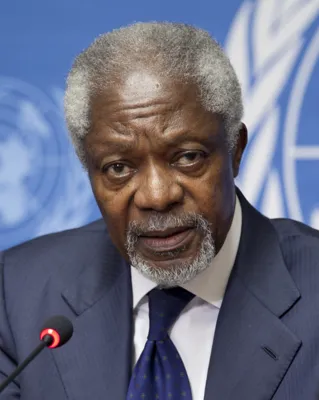 Kofi Annan
UN Secretary-General from 1997 to 2006
 Kofi Arko Nokoe
Member of Parliament
 Kofi Asare
Medical Doctor, Former Member of Parliament
 Kofi Bediako Gershon Gbediame
Former Member of Parliament
Compare Kofi Abrefa Busia
Schools
Sources & References
- "Kofi Abrefa Busia". Wikipedia.
- "Wikidata entry Q51267". Wikidata.
Profile compiled from publicly available records. See our full source methodology →