

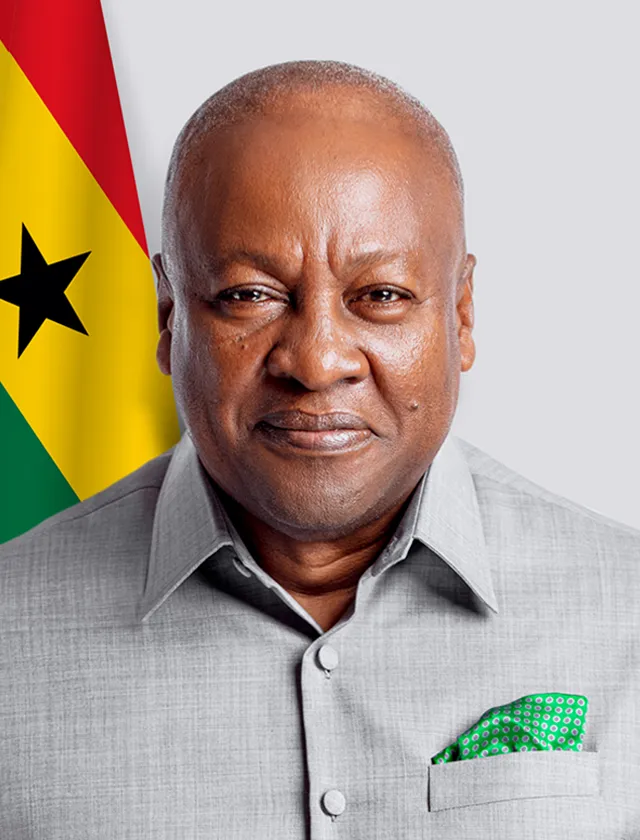
- Identity confirmed
- Date of birth checked
- Career history reviewed
- Awards & achievements audited
John Dramani Mahama
President of Ghana
About John Dramani Mahama
John Dramani Mahama is one of Ghana's most consequential political figures of the twenty-first century, a man who has served his country as Member of Parliament, Communications Minister, Vice President and President, and who won back the presidency in 2024 after a period in opposition that his critics assumed would end his political story. It did not. His career is a study in political resilience, and the second chapter of his presidency, begun in January 2025, is still being written.
Early life and education
He was born on 29 November 1958 in Damongo, in what is now the Savannah Region of northern Ghana. His father, Emmanuel Adama Mahama, was a member of parliament and a minister under Ghana's founding president Kwame Nkrumah, a political lineage that meant public service was never an abstract idea in the household where he grew up. That background gave him an early education in Ghanaian governance that no university course could replicate.
He attended Damongo Secondary School before going on to the University of Ghana at Legon, where he studied history and graduated with a bachelor's degree. He later pursued postgraduate studies in communication at the Institute of Social Studies in The Hague, Netherlands, adding a formal credential in the field that would mark his first major government role. He has spoken often about the University of Ghana years as formative, a period that shaped both his intellectual outlook and his understanding of Ghana's complex ethnic, regional and political landscape.
Early political career
He was elected to parliament in 1996, representing the Bole-Bamboi constituency in the Northern Region on a National Democratic Congress ticket, and won re-election in 2000, 2004 and 2008. In parliament he was regarded as a serious, technically capable legislator rather than a headline-generating firebrand, which was both a strength and, in the theatrical world of Ghanaian politics, occasionally a limitation.
His appointment as Minister of Communications under President John Atta Mills in 2009 put him at the centre of Ghana's expanding telecommunications sector and gave him executive experience that complemented his legislative record. He was effective in the role and built a reputation for pragmatic policy management rather than political grandstanding.
Vice President
He served as Vice President from January 2009, running alongside President Mills in the election that brought the NDC back to power. The partnership between Mills and Mahama was built on complementary temperaments: Mills was cerebral, deliberate and deeply religious; Mahama was communicative, regionally connected in the north and capable of the retail politics that national campaigns require.
When President Mills died in office on 24 July 2012, Mahama was sworn in as President the same day under the constitutional provision that makes the Vice President the automatic successor. He became, at 53, Ghana's youngest president at the time of his swearing-in, and he inherited the presidency at a moment of national grief that required immediate leadership.
Presidency: first term (2012 to 2017)
He won the 2012 presidential election in his own right, defeating the NPP's Nana Akufo-Addo in an election whose result was contested at the Supreme Court before being upheld. His presidency was marked by significant infrastructure investment, including roads, hospitals, schools and energy projects, and by the power crisis known as dumsor, recurring and severe electricity outages that became the defining public frustration of his administration and the single issue most associated with his name in political conversation.
The dumsor crisis, caused by a combination of fuel supply problems, aging infrastructure and generation shortfalls, disrupted businesses and households across Ghana for extended periods and gave the opposition a powerful and recurring attack line. His government's management of the crisis, and his own public communications around it, were widely criticised, and the issue contributed significantly to his defeat in 2016.
His infrastructure record during the same period was substantial: the completion of major road projects, expansion of health facilities including hospital construction across multiple regions, and investments in education including secondary school expansion. His supporters argue that the infrastructure legacy of his administration is visible in ways that have outlasted the political narrative around dumsor.
2016 defeat and opposition years
He lost the 2016 election to Nana Akufo-Addo by a margin that was politically decisive. He conceded before the official results were declared, a gesture of democratic maturity that was noted domestically and internationally and that stood in contrast to the 2012 post-election dispute. He remained active in NDC politics and in international affairs during the Akufo-Addo years, serving in roles for the Economic Community of West African States and speaking publicly on continental governance issues.
He contested the 2020 presidential election against Akufo-Addo, losing again in a result that was again disputed before the Supreme Court upheld it. The second consecutive defeat raised questions within his party about whether he remained the right candidate to lead the NDC, questions that were answered definitively by the events of 2024.
2024 election victory
He won the December 2024 presidential election, defeating the NPP's Mahamudu Bawumia in a campaign fought largely on economic management. The Akufo-Addo government's handling of Ghana's debt crisis and the country's 2023 engagement with the International Monetary Fund gave the NDC a strong economic narrative, and Mahama ran as the candidate of recovery and fiscal responsibility. He was inaugurated for his second presidency on 7 January 2025.
Personal life
He is married to Lordina Mahama, who is a prominent public figure in her own right and who has been active in social and humanitarian work throughout her husband's political career. The couple have children. He has spoken publicly about his Christian faith and about the influence of his family upbringing in the northern region on his political values and his sense of what governance should look like.
Political Legacy
John Mahama's political story is unusual in Ghanaian democratic history: a president who lost power, accepted defeat, remained in the arena, and won it back. The infrastructure he built during his first administration is part of the record. The economic challenges of that period are also part of it. How his second term is assessed will depend on decisions not yet taken and on a Ghanaian economy that is still recovering from its most difficult years in a generation.
Frequently asked questions about John Dramani Mahama
What is John Dramani Mahama's net worth?
John Dramani Mahama has an estimated net worth of $20 million (estimated).
How old is John Dramani Mahama?
John Dramani Mahama is 67 years old, born November 29, 1958.
What is John Dramani Mahama known for?
John Dramani Mahama is a President of Ghana.
Who is John Dramani Mahama married to?
John Dramani Mahama is married to Lordina Mahama.
Does John Dramani Mahama have children?
John Dramani Mahama's children: 5.
What is John Dramani Mahama's nationality?
John Dramani Mahama is Ghanaian.
Where did John Dramani Mahama study?
John Dramani Mahama studied at University of Ghana Achimota School Ghana Senior High School (Ghanasco).
Personal Information
- Full Name
- John Dramani Mahama
- Date of Birth
- 29 November 1958
- Nationality
- Ghanaian
- Region
- Savannah
- Spouse
- Lordina Mahama
- Children
- 5
- Religion
- Christianity
Education
- University of Ghana Achimota School
- Ghana Senior High School (Ghanasco)
Awards & Achievements
Connections
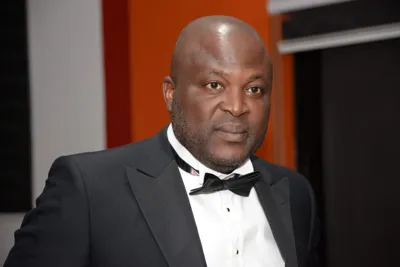
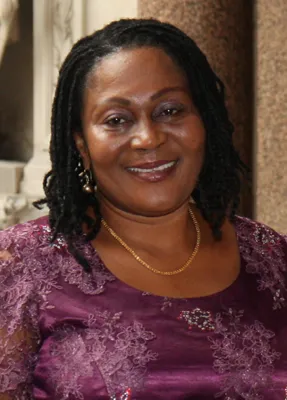
How John Dramani Mahama is linked to other figures on Agyedin.
Offices Held
Related Personalities
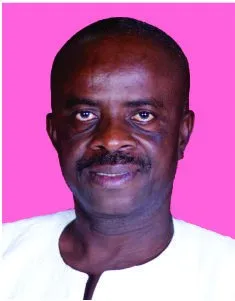 John Duoghr Baloroo
Former Member of Parliament
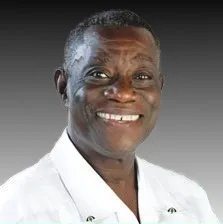 John Evans Atta Mills
Politician, University Teacher, Lawyer
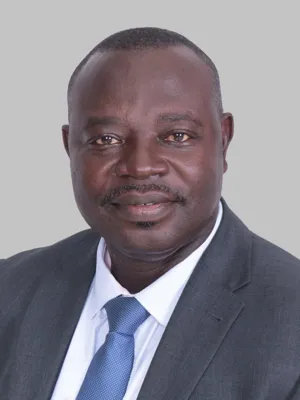 John Frimpong Osei
Former Member of Parliament
 John Gyetuah
Former Minister of State, Former Member of Parliament
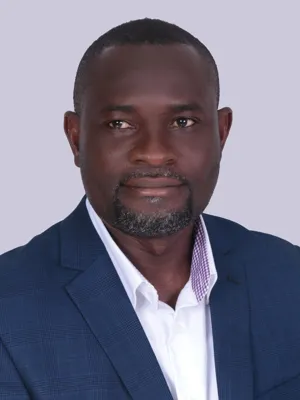 John Kumah
Lawyer, Former Deputy Minister for Finance
 John Kwabena Bless Oti
Politician, Member of Parliament
 John Kwadwo Gyapong
Oti Regional Minister
Compare John Dramani Mahama
Schools
Sources & References
- "John Mahama". Wikipedia.
Profile compiled from publicly available records. See our full source methodology →