

- Identity confirmed
- Date of birth checked
- Career history reviewed
- Awards & achievements audited
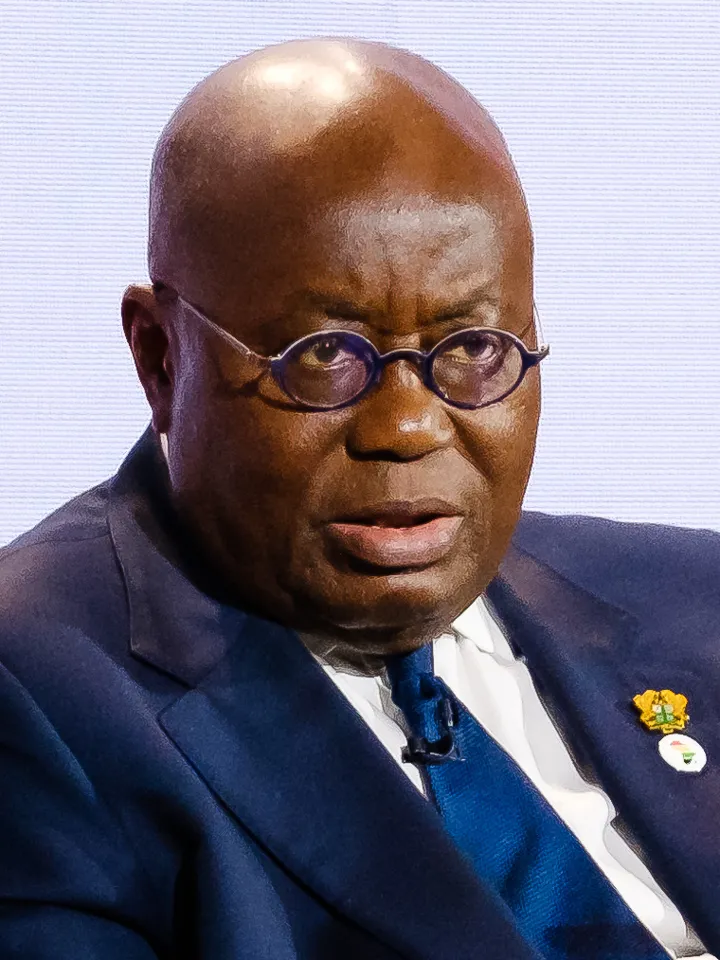
Nana Addo Dankwa Akufo-Addo
Diplomat, Lawyer, Politician
About Nana Addo Dankwa Akufo-Addo
Nana Addo Dankwa Akufo-Addo served as President of Ghana from 2017 to 2025, leading the country through one of its most challenging economic periods while implementing the Free Senior High School policy that is likely to be his most enduring domestic legacy. He came to the presidency after two consecutive electoral defeats, making his 2016 victory one of the most significant reversals in Ghanaian democratic history, and he governed for two full terms before handing power back to the NDC's John Mahama in January 2025.
Family and early life
He was born on 29 March 1944 in Accra into one of Ghana's most distinguished political families. His father, Edward Akufo-Addo, served as Chief Justice of Ghana and as Head of State during the Supreme Military Council era in the 1970s, giving him a direct personal connection to the highest levels of Ghanaian governance from childhood. His family background is deeply woven into the story of Ghana's post-independence political development, and the expectations that came with that background shaped both his ambitions and the scrutiny he faced throughout his public life.
He attended Rowe Road School and then Bono National Secondary School before going on to Lancing College in England, where he completed his secondary education. He studied at the University of Ghana at Legon and then went to Paris for further studies before reading law at the Inns of Court in London, where he qualified as a barrister. He was called to the Ghana Bar in 1975 and practised law for several years before entering politics full-time.
Legal and early political career
His legal career gave him a reputation as a serious and technically capable advocate, and his early political activism, including involvement in pro-democracy movements during Ghana's military governance periods, established his credentials as someone willing to take personal and professional risks for constitutional governance. He was a member of the People's Movement for Freedom and Justice in the early 1990s, one of the civil society organisations that pushed for the return to multiparty democracy that produced Ghana's 1992 constitution.
He was elected to parliament for Abuakwa North in the Eastern Region in 1996 and served in parliament while building his profile within the New Patriotic Party. His appointment as Attorney General and Minister of Justice under President John Kufuor from 2001 to 2003 gave him his first major executive role, followed by his appointment as Minister of Foreign Affairs from 2003 to 2007. Both positions gave him experience in government administration and in Ghana's international relationships that would inform his presidential ambitions.
Presidential campaigns: 2008 and 2012
He ran for president in 2008 and came extremely close to winning, losing to John Atta Mills in a runoff by less than one percentage point, the closest presidential election result in Ghana's democratic history. The narrowness of that defeat established him as the NPP's most competitive potential candidate while making the loss personally difficult to process. He ran again in 2012, losing to John Mahama in an election whose result he contested at the Supreme Court, which ultimately upheld the NDC's victory.
Two consecutive defeats for the highest office would have ended most political careers. He remained as the NPP's standard-bearer, a decision that was not universally supported within the party but that proved correct when the political and economic conditions shifted.
Presidency: 2017 to 2021
He won the 2016 election decisively, defeating incumbent John Mahama in an election that gave the NPP a majority in parliament as well as the presidency. His inauguration on 7 January 2017 came at a moment of economic difficulty but also of public optimism about a change in direction. He was 72 at the time of taking office, making him one of the oldest leaders to assume the Ghanaian presidency.
The Free Senior High School policy, implemented from September 2017, was his signature domestic programme: an end to tuition fees at public senior high schools across Ghana, making secondary education financially accessible to families who had previously been unable to afford it. The policy was controversial in its implementation, with debates about funding sustainability, quality maintenance and infrastructure capacity, but its social reach was undeniable. Enrolment figures rose substantially, and the programme became one of the most discussed education policies in West Africa.
He also prioritised what he called the fight against illegal small-scale mining, known in Ghana as galamsey, appointing a special minister for the portfolio and launching enforcement operations against illegal miners whose activities were destroying river systems and farmland. The fight proved more difficult than the initial rhetoric suggested, with illegal mining continuing despite enforcement efforts, and the issue remained a source of public frustration throughout his tenure.
Presidency: 2021 to 2025 and economic crisis
He won re-election in December 2020, defeating John Mahama for the second consecutive time in a closer result than 2016. His second term was dominated by the economic consequences of the Covid-19 pandemic and by the global inflation and interest rate environment of 2022 and 2023, which hit Ghana's public finances severely. The country's debt reached unsustainable levels, and in 2023 Ghana entered an IMF programme and restructured its external and domestic debt in one of the largest debt restructuring exercises in sub-Saharan African history.
The economic hardship of the final years of his administration, including currency depreciation, inflation and a reduction in real incomes, provided the NDC with the economic narrative that powered John Mahama's successful 2024 campaign. He stepped down in January 2025 at the end of his constitutionally mandated two terms.
Personal life
He is married to Rebecca Akufo-Addo, who maintained a public profile as First Lady and was active in humanitarian and social causes during her husband's presidency. He has children. He is a practising Christian and has spoken about the role of faith in his public and private life. He remains a deeply consequential figure in Ghanaian political history regardless of how the final assessment of his presidential record develops.
Political Legacy
Akufo-Addo's legacy will be debated for years. The Free SHS policy represents a genuine structural change in Ghanaian education access that is unlikely to be reversed by any subsequent government. The economic crisis of his second term represents a genuine failure of macroeconomic management whose causes are disputed but whose consequences were real. Between those two poles sits a presidency that attempted large things, succeeded in some of them, and left the country in more difficult economic circumstances than it found it. That is the honest account, and it is what history will have to work with.
Frequently asked questions about Nana Addo Dankwa Akufo-Addo
What is Nana Addo Dankwa Akufo-Addo's net worth?
Nana Addo Dankwa Akufo-Addo has an estimated net worth of Not publicly disclosed.
How old is Nana Addo Dankwa Akufo-Addo?
Nana Addo Dankwa Akufo-Addo is 82 years old, born March 29, 1944.
What is Nana Addo Dankwa Akufo-Addo known for?
Nana Addo Dankwa Akufo-Addo is a Diplomat, Lawyer, Politician.
Who is Nana Addo Dankwa Akufo-Addo married to?
Nana Addo Dankwa Akufo-Addo is married to Rebecca Akufo-Addo.
Does Nana Addo Dankwa Akufo-Addo have children?
Nana Addo Dankwa Akufo-Addo's children: 5.
What is Nana Addo Dankwa Akufo-Addo's nationality?
Nana Addo Dankwa Akufo-Addo is Ghanaian.
Where did Nana Addo Dankwa Akufo-Addo study?
Nana Addo Dankwa Akufo-Addo studied at New College University of Ghana Accra Academy University of Cape Coast Lancing College City University of London Holmewood House School.
Personal Information
- Full Name
- Nana Addo Dankwa Akufo-Addo
- Date of Birth
- 29 March 1944
- Nationality
- Ghanaian
- Region
- Greater Accra
- Spouse
- Rebecca Akufo-Addo
- Children
- 5
- Religion
- Presbyterianism
Education
- New College University of Ghana
- Accra Academy
- University of Cape Coast
- Lancing College
- City University of London
- Holmewood House School
Awards & Achievements
Connections
How Nana Addo Dankwa Akufo-Addo is linked to other figures on Agyedin.
Offices Held
Related Personalities
 Nana Agyei Baffour Awuah
Member of Parliament, Lawyer
 Nana Akomea
Third National Vice Chairman of the NPP, Former Minister of Information, Former Member of Parliament
 Nana Akua Owusu Afriyieh
Former Member of Parliament
 Nana Ama Dokua Asiamah-Adjei
Former Member of Parliament
 Nana Amaniampong Marfo
Former Member of Parliament
 Nana Amoakoh Gyampa
Former Member of Parliament
 Nana Ampaw Kwame Addo-Frempong
Member of Parliament
Compare Nana Addo Dankwa Akufo-Addo
Schools
Sources & References
- "Nana Akufo-Addo". Wikipedia.
Profile compiled from publicly available records. See our full source methodology →